

A More Strategic Approach to Workforce Wellbeing
Health Will Matter helps organizations reduce burnout risk, strengthen workforce resilience, and improve long-term organizational performance through a structured, multidimensional wellness model.
Many workplace wellness initiatives are reactive, fragmented, or disconnected from broader business priorities. Health Will Matter provides a more strategic approach—combining assessment, program development, mental health expertise, fitness support, leadership consultation, and continuous evaluation to create healthier, more sustainable workplaces.
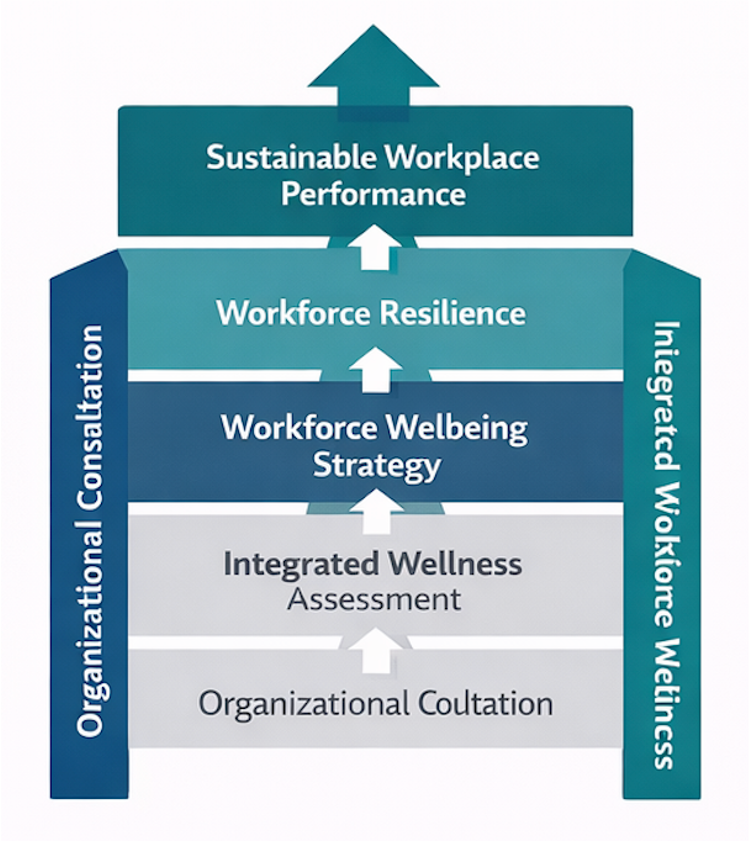
Why Many Wellness Programs Fall Short
Many organizations offer wellness initiatives, but few provide a true workforce wellbeing strategy.
Traditional wellness programs often focus on isolated services such as fitness challenges, app-based resources, or Employee Assistance Programs. While these services may provide value, they are frequently reactive, underutilized, and disconnected from the broader organizational factors influencing employee wellbeing.
Health Will Matter believes organizations need a more comprehensive approach—one that addresses not only physical and emotional health, but also workplace culture, leadership, resilience, financial wellbeing, social connection, and the broader environment in which employees work.
The Health Will Matter Model
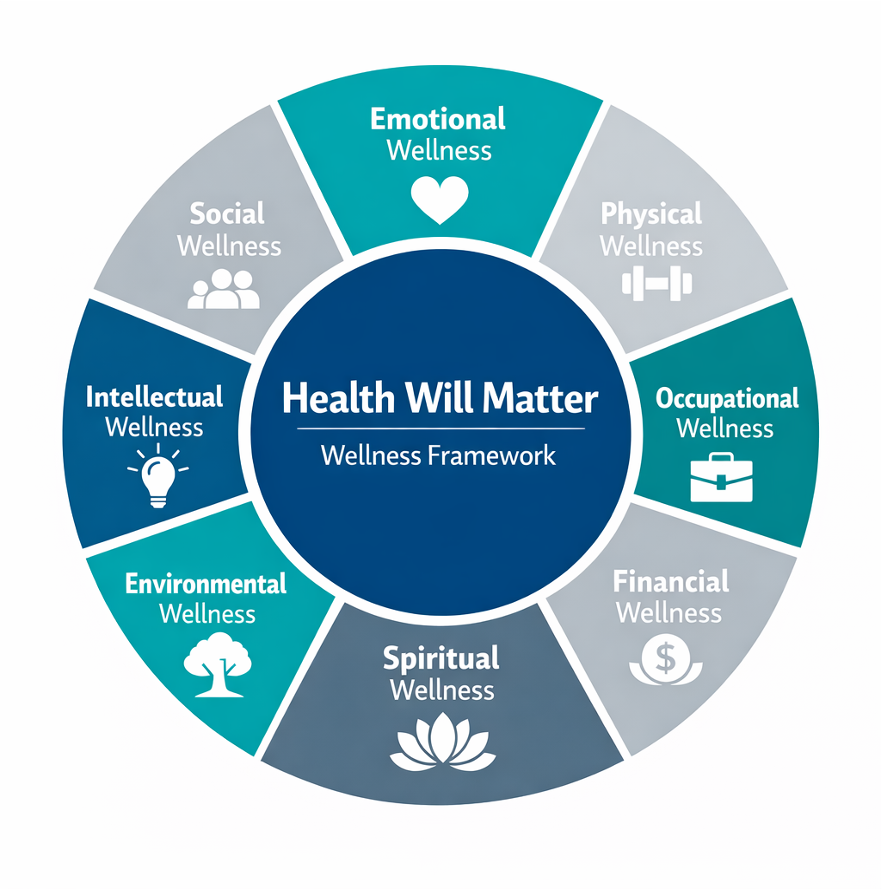
Health Will Matter uses a multidimensional wellness model designed to support the whole employee and create healthier organizations.
We believe that without the Eight Dimensions of Wellness, organizations do not have a true wellness program—regardless of what it may be called.
Our model addresses:
Emotional Wellness
Physical Wellness
Occupational Wellness
Social Wellness
Intellectual Wellness
Spiritual Wellness
Environmental Wellness
Financial Wellness
By integrating these dimensions into a structured workforce wellbeing strategy, organizations are better positioned to reduce burnout risk, improve engagement, and support sustainable performance.
The Eight Dimensions of Wellness in the Workplace
Health Will Matter's approach is built upon the Eight Dimensions of Wellness, recognizing that employee wellbeing extends beyond physical health alone.
Our framework incorporates:
Emotional Wellness
Developing healthy coping strategies and emotional resilience.
Physical Wellness
Supporting healthy lifestyle behaviors and sustainable energy.
Occupational Wellness
Promoting meaningful work experiences and professional growth.
Social Wellness
Strengthening relationships and workplace connection.
Intellectual Wellness
Encouraging learning, curiosity, and continuous development.
Financial Wellness
Supporting financial wellbeing and reducing financial stress.
Environmental Wellness
Creating healthy and supportive work environments.
Spiritual Wellness
Helping individuals connect with purpose, values, and meaning.
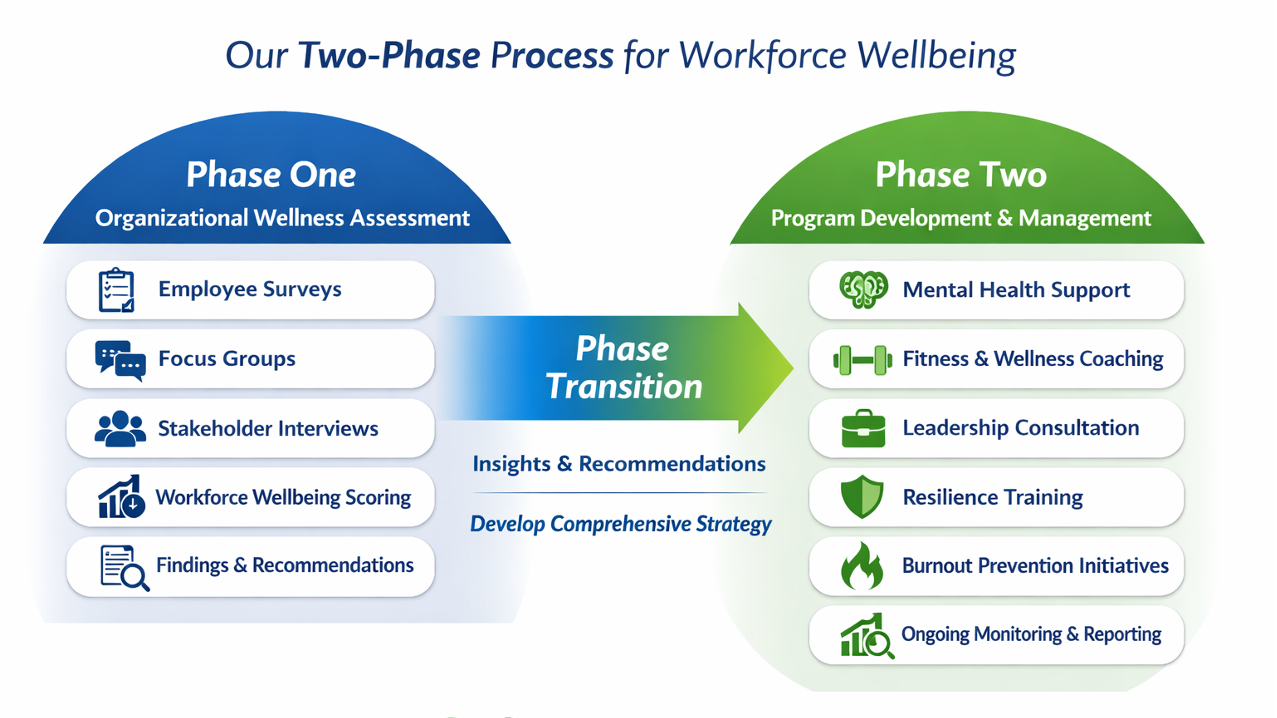
A Structured Process for Workforce Wellbeing
Phase One — Organizational Wellness Assessment
Health Will Matter begins with a structured assessment process designed to identify workforce challenges, burnout risk factors, engagement barriers, and organizational priorities.
This phase may include:
employee surveys
questionnaires
focus groups
stakeholder interviews
workforce wellbeing scoring
executive findings and recommendations
At the conclusion of Phase One, organizations may either conclude the engagement or move into Phase Two for program development and ongoing management.
Phase Two — Program Development & Management
Based on assessment findings, Health Will Matter develops and manages a workforce wellbeing strategy aligned with organizational needs.
Program delivery may include:
Licensed Mental Health Professional support
Certified Personal Trainer support
leadership consultation
resilience development
mental health initiatives
burnout prevention strategies
ongoing reporting and program refinement
The Eight Dimensions of Wellness
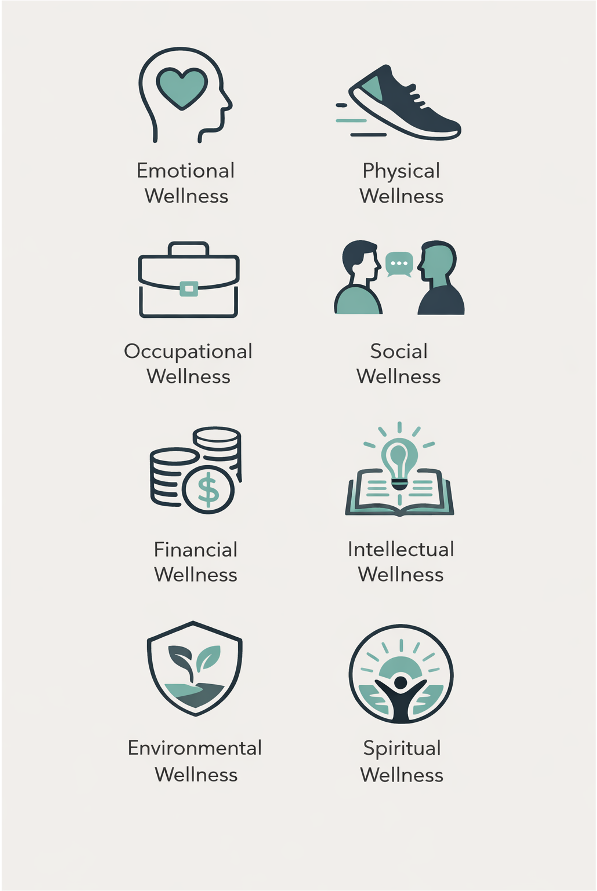
Health Will Matter uses the Eight Dimensions of Wellness as the foundation for workforce wellbeing strategy.
Dimensions
Emotional Wellness — managing stress, emotions, and mental wellbeing
Physical Wellness — supporting movement, energy, and recovery
Occupational Wellness — improving work conditions, workload, and purpose
Social Wellness — strengthening relationships, communication, and support
Intellectual Wellness — encouraging learning, growth, and adaptability
Spiritual Wellness — supporting values, meaning, and purpose
Environmental Wellness — improving the conditions in which employees work
Financial Wellness — reducing financial stress and instability
Together, these dimensions create a more complete and sustainable approach to employee wellbeing

Assessment Creates Better Outcomes
Effective workforce wellbeing strategies begin with understanding the unique challenges facing an organization.
Health Will Matter uses surveys, questionnaires, focus groups, and stakeholder interviews to identify workforce needs, burnout risk factors, engagement barriers, and organizational priorities.
This assessment process allows organizations to make more informed decisions and ensures that program development is aligned with real workforce data rather than assumptions.
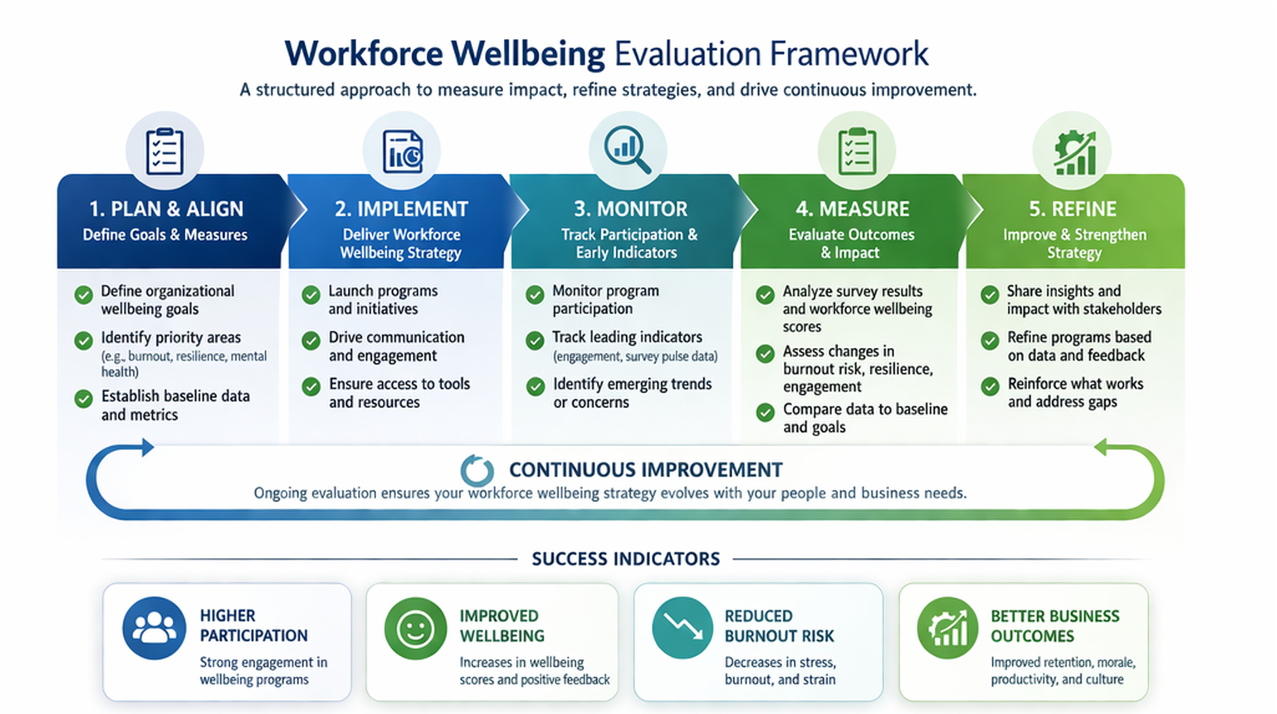
Continuous Evaluation and Reporting
Workforce wellbeing strategies should evolve as workforce needs change.
Health Will Matter continuously collects and evaluates data throughout program implementation to monitor participation, identify emerging concerns, and measure program effectiveness.
This ongoing process helps organizations refine services, strengthen outcomes, and ensure workforce wellbeing efforts remain aligned with organizational goals.

Create a More Sustainable Workforce
If your organization is exploring ways to reduce burnout risk, strengthen workforce resilience, and improve long-term workforce wellbeing, we welcome the opportunity to learn more about your goals.