
Measure More Than Participation. Measure Workforce Performance.
Most wellness programs focus on activity tracking, incentives, or surface-level engagement metrics. Few organizations are measuring the true business impact of workforce wellbeing.
We help employers evaluate wellness through a broader organizational lens — including burnout prevention, workforce resilience, mental health, communication, culture, recovery, and sustainable performance.
Our approach helps organizations move beyond wellness as a perk and toward wellness as a strategic business investment.

Measuring Wellness Program Success
Organizations should evaluate wellness initiatives using measurable indicators such as:
Employee engagement
Retention rates
Absenteeism
Presenteeism
Burnout risk
Productivity
Healthcare utilization
Employee satisfaction
Health Will Matter works with organizations to establish meaningful metrics and reporting processes that demonstrate the impact of workforce wellness investments.
Wellness Without Measurable Outcomes Creates Organizational Risk
A true corporate wellness strategy should help employers improve:
Workforce resilience
Employee retention
Productivity
Communication
Sustainable performance
Psychological wellbeing
Team functioning
Leadership support
Organizational culture
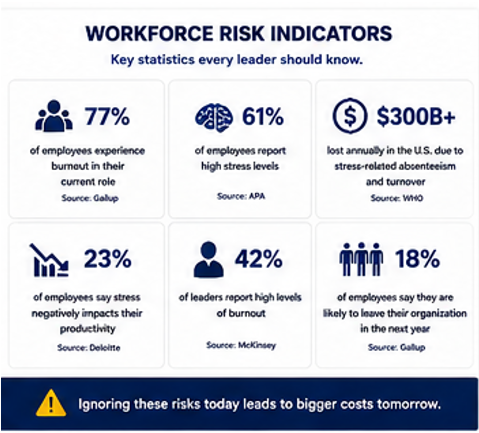
When wellness initiatives fail to address the full employee experience, employers may continue absorbing hidden organizational costs without seeing meaningful long-term improvement.
Employers are investing billions into wellness initiatives, EAPs, digital platforms, and employee support programs. Yet many organizations still struggle with:
Burnout
Absenteeism
Presenteeism
Low morale
Leadership fatigue
Turnover
Workplace disengagement
Poor utilization of support services
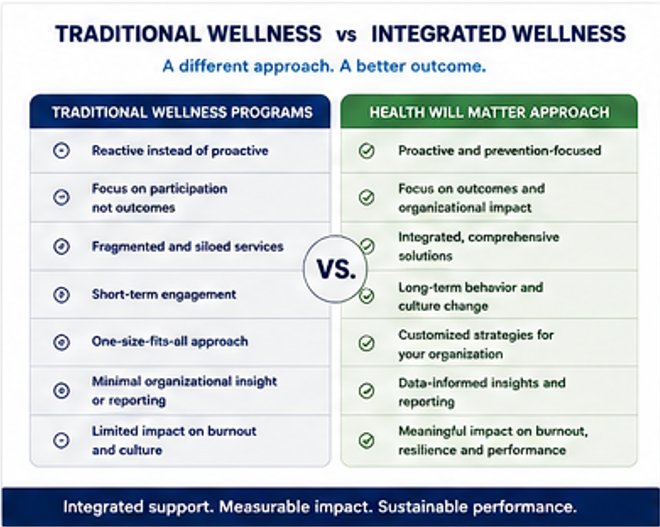
Traditional wellness models often measure participation rather than organizational outcomes.
Burnout Is a Business Performance Issue
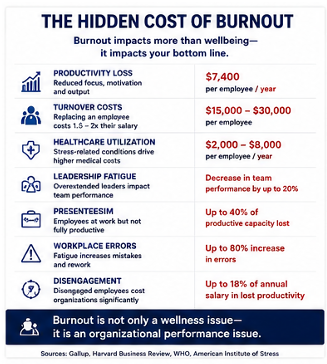
Employee burnout impacts far more than morale. It can affect operational performance, retention, healthcare utilization, communication, leadership capacity, and organizational stability.
Research continues to show strong connections between burnout and:
Increased healthcare spending
Reduced productivity
Higher turnover
Workplace errors
Lower engagement
Increased mental health concerns
Reduced team effectiveness
For employers, burnout can create both visible and invisible costs across the organization.
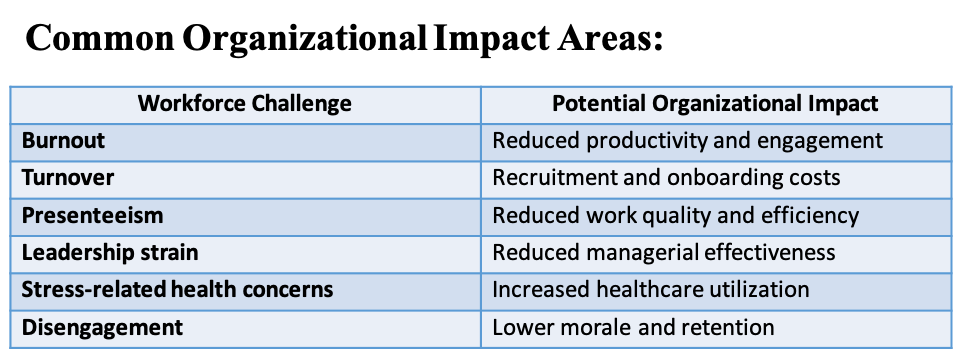
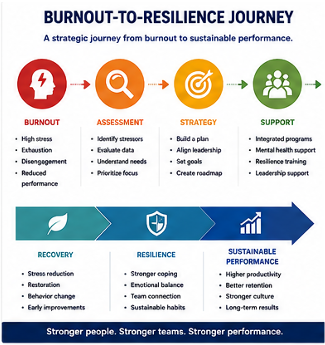
Organizations that proactively invest in workforce wellbeing may improve long-term organizational sustainability while reducing avoidable workforce strain.
Effective Wellness Measurement Requires More Than Participation Data
Many organizations rely heavily on participation numbers, app usage, or event attendance. While these metrics may be useful, they do not fully measure workforce wellbeing or organizational performance outcomes.
We encourage organizations to evaluate wellness through multiple dimensions of workforce functioning.
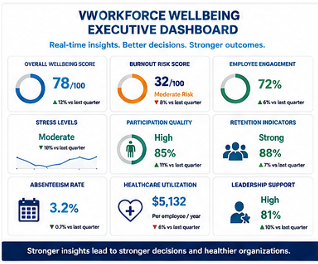
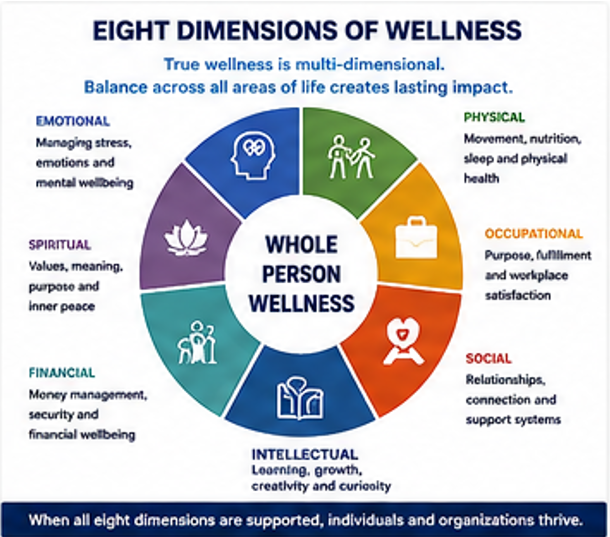
Areas Organizations Should Evaluate:
-
Employee stress levels
Burnout indicators
Recovery and resilience
Emotional wellbeing
Work-life sustainability
-
Communication quality
Team collaboration
Leadership support
Psychological safety
Workplace morale
-
Productivity trends
Absenteeism
Retention
Healthcare utilization
Workforce stability
-
Employee feedback
Service utilization
Engagement quality
Long-term sustainability
Outcome progression over time
A More Integrated Approach to Workforce Wellbeing
Unlike fragmented wellness models that separate physical wellness, mental health, leadership support, and organizational strategy, our model takes an integrated approach to workforce wellbeing.

Our process may include:
-
We evaluate organizational stressors, workforce challenges, communication barriers, and employee wellbeing trends.
-
We provide structured recommendations aligned with organizational goals, workforce needs, and operational realities.
-
Programs may involve collaboration between:
Licensed Mental Health Professionals
Certified Wellness Professionals
Leadership and organizational support services
-
Organizations receive structured reporting designed to monitor workforce wellbeing trends, engagement patterns, and organizational outcomes over time.
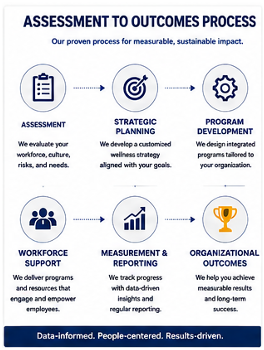
This allows employers to move toward a more sustainable and measurable wellness strategy.
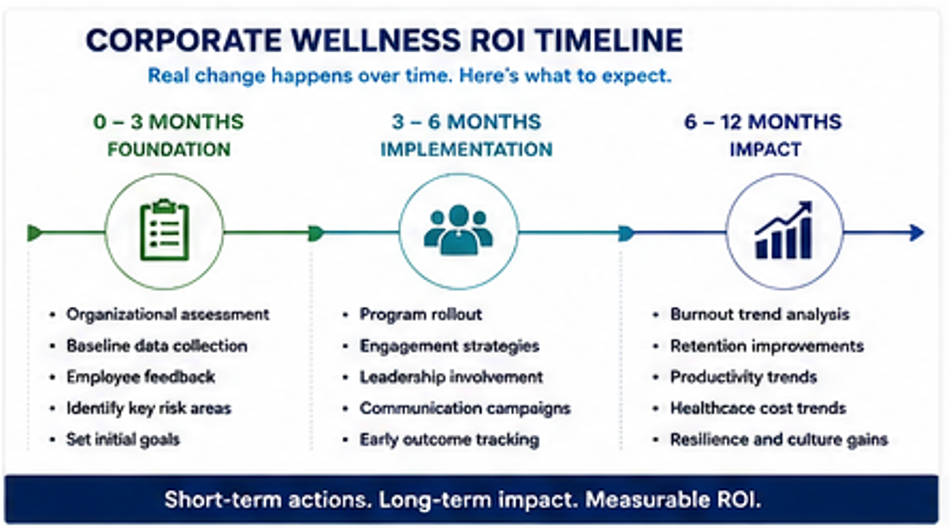

Sustainable Workforce Performance Requires Ongoing Investment
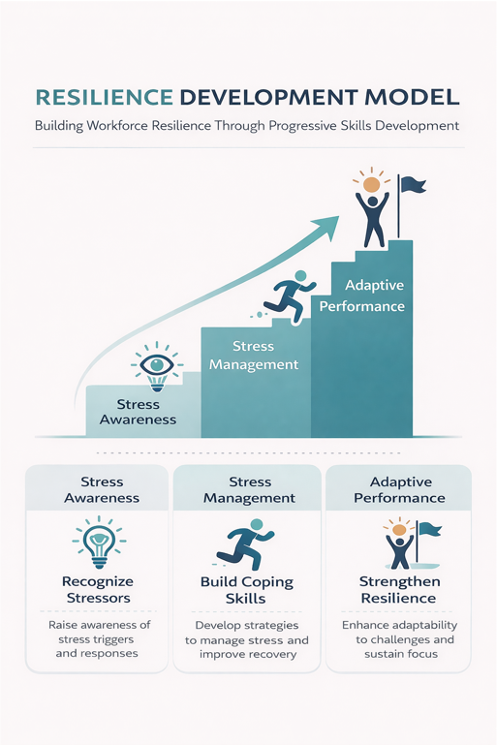
Organizations often treat wellness as a short-term initiative rather than a long-term workforce strategy.
A more sustainable approach recognizes that workforce wellbeing influences:
Performance
Retention
Culture
Leadership
Engagement
Organizational resilience
When employers invest strategically in workforce wellbeing, they may strengthen both employee support systems and organizational performance over time.
We help organizations build wellness strategies designed to support long-term workforce sustainability rather than temporary engagement spikes.
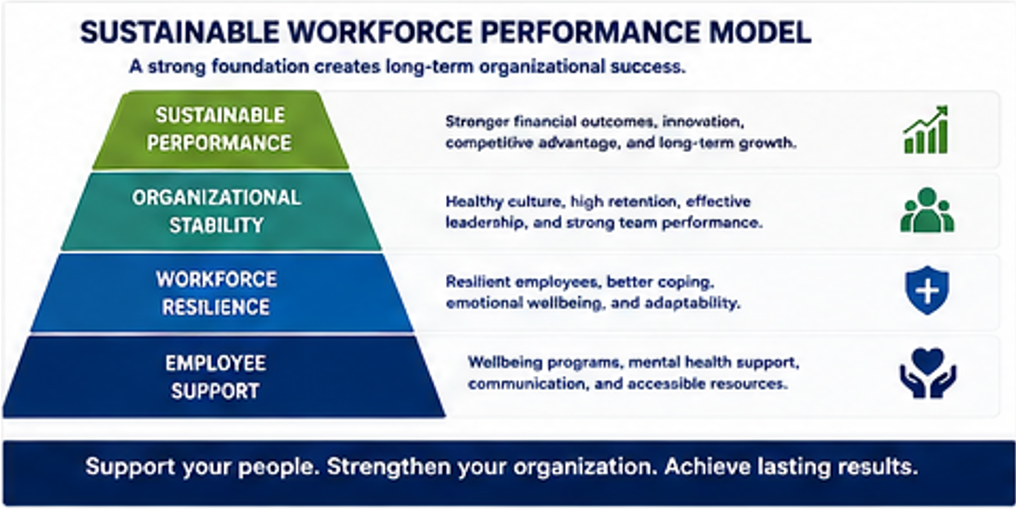
Build a Wellness Strategy That Supports Organizational Performance
Wellness initiatives should do more than generate participation numbers. They should help organizations strengthen workforce resilience, reduce burnout risk, improve employee wellbeing, and support sustainable performance.
We partner with employers to create structured, measurable, and organization-focused wellness strategies designed for long-term impact.