Organizational Wellness Assessment
Health Will Matter helps organizations better understand workforce wellbeing, burnout risk, engagement barriers, and organizational challenges through a structured assessment process.
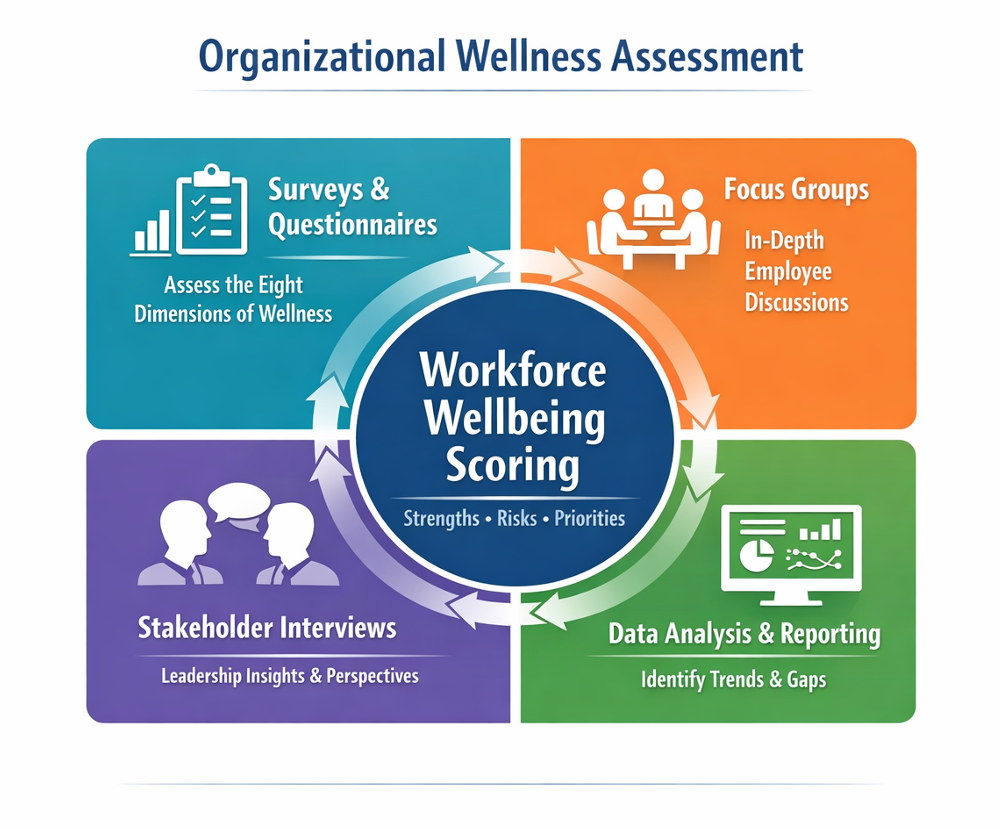
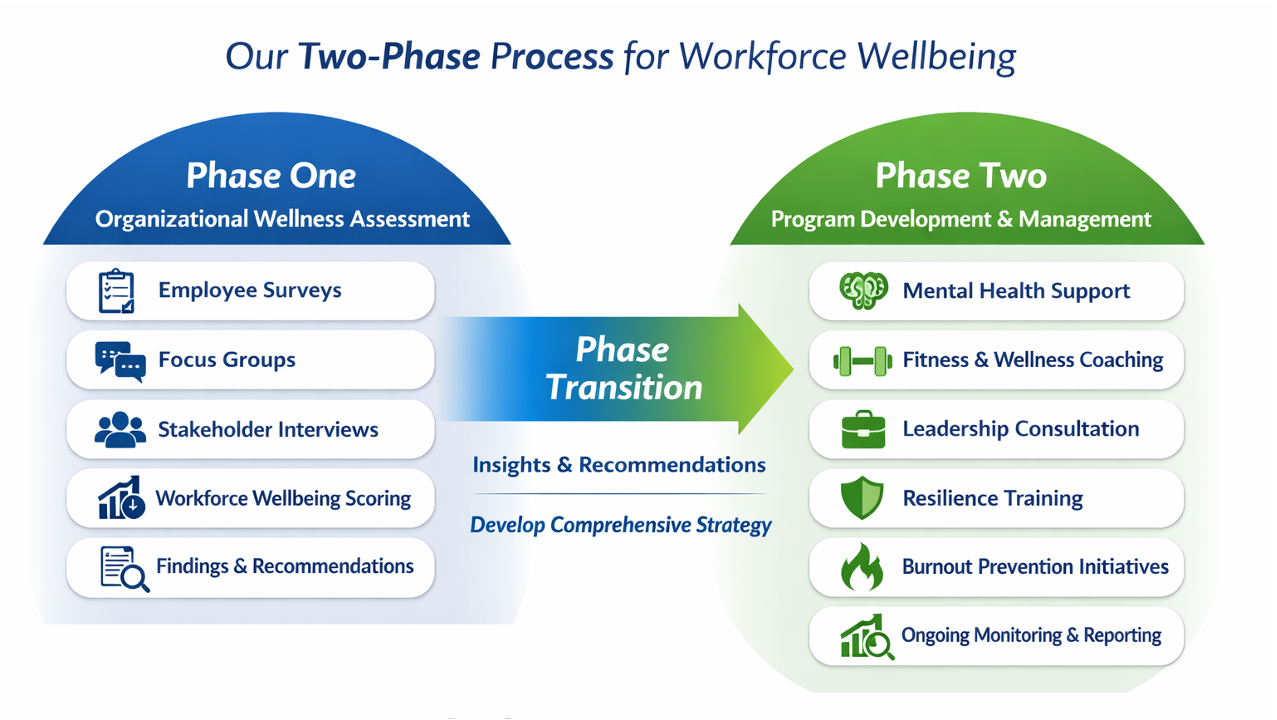
Effective workforce wellbeing strategies begin with understanding the unique needs of an organization. Health Will Matter uses surveys, questionnaires, focus groups, stakeholder interviews, and workforce wellbeing scoring to identify the factors affecting employee wellbeing, resilience, and organizational performance.
Why Organizational Assessment Matters
Many organizations implement wellness initiatives without fully understanding the workforce challenges they are trying to solve.
An Organizational Wellness Assessment helps employers identify:
burnout risk factors
workplace stressors
engagement barriers
mental health concerns
communication gaps
leadership challenges
culture concerns
employee wellbeing priorities
This allows organizations to make more informed decisions and develop strategies that are aligned with actual workforce needs rather than assumptions.
What the Assessment Includes
Surveys and Questionnaires
Health Will Matter deploys structured surveys and questionnaires designed to collect data across the Eight Dimensions of Wellness.
Focus Groups
Facilitated focus groups provide deeper insight into employee experiences, concerns, workplace culture, and organizational barriers.
Stakeholder Interviews
Leadership interviews help identify organizational priorities, workforce concerns, business goals, and desired outcomes.
Workforce Wellbeing Scoring
Assessment findings are organized into a structured wellness scoring framework to identify strengths, risks, and priority areas.
What Organizations Receive
At the conclusion of the assessment process, Health Will Matter provides:
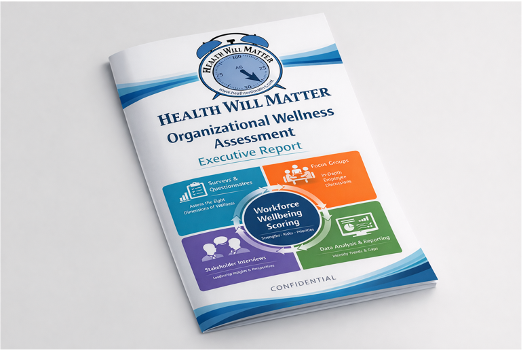
executive findings report
workforce wellbeing scoring results
burnout risk analysis
key themes and trends
organizational strengths and gaps
priority recommendations
guidance on staffing and service cadence
recommendations for Phase Two program development
The goal is to provide leadership teams with a clear understanding of workforce wellbeing challenges and the next steps needed to address them.

What Happens After the Assessment
After Phase One is complete, organizations may choose to conclude the engagement or move into Phase Two for program development and ongoing management.
If an organization moves forward, Health Will Matter can provide:
Licensed Mental Health Professional Support
Certified Personal Trainer Support
Leadership Consultation
Burnout Prevention Programming
Employee Resilience Training
Workplace Mental Health Initiatives
Ongoing Evaluation and Reporting
This creates a more structured and sustainable approach to workforce wellbeing.
Start With A Better Understanding of Your Workforce
If your organization is looking to better understand burnout risk, employee wellbeing, and workforce challenges, Health Will Matter can help.