
Our interventions are to help employees build the skills needed to adapt, recover, and perform in the face of workplace stress, change, and uncertainty.
Employee Resilience Training
Employee resilience is no longer optional in today’s workforce. Organizations are facing increased levels of burnout, stress, disengagement, and fatigue. Health Will Matter helps organizations strengthen employee resilience through structured training, mental health support, physical wellness strategies, and leadership alignment.
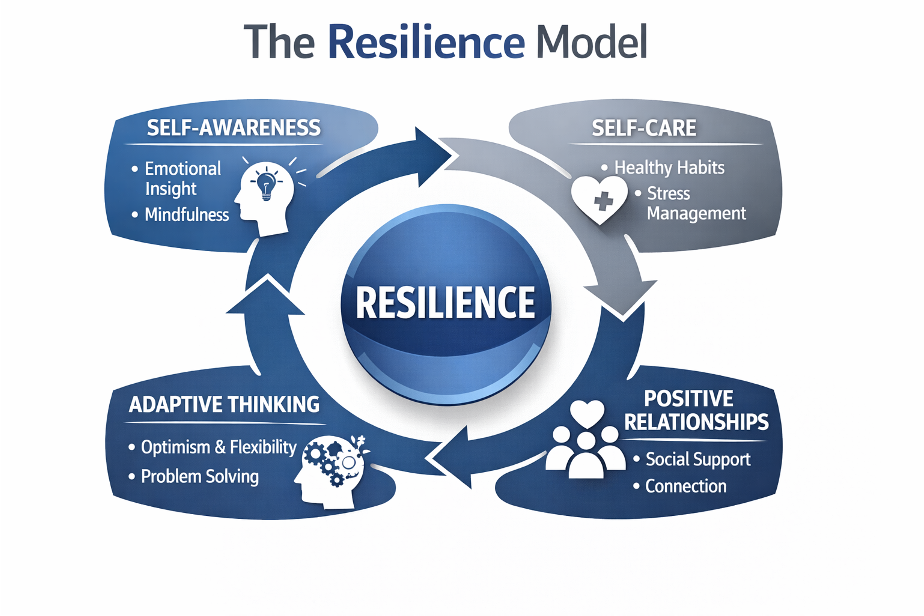
What Is Employee Resilience?

Employee resilience is the ability to adapt, recover, and maintain performance during periods of stress, change, and adversity.
Resilient employees are better equipped to:
Manage workplace stress
Adapt to organizational change
Maintain productivity
Navigate uncertainty
Support colleagues
Sustain long-term wellbeing
Health Will Matter's resilience training programs provide practical tools that help employees build skills they can apply both inside and outside the workplace.

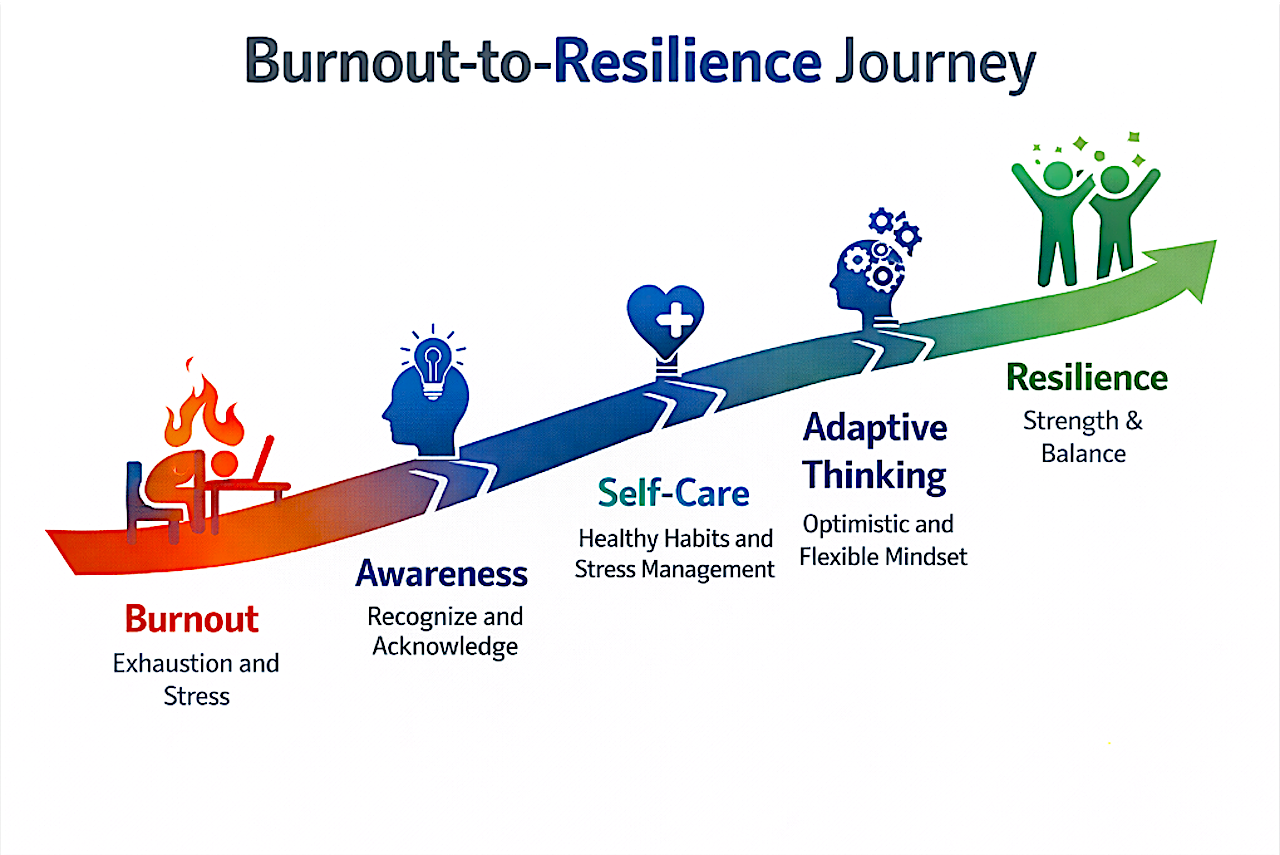
Why Employee Resilience Matters
Employees who are resilient are better equipped to manage pressure, adapt to change, maintain productivity, and recover from setbacks.
Without resilience support, organizations often experience:
increased burnout
higher absenteeism
lower morale
reduced productivity
higher turnover
more stress-related health concerns
weaker collaboration and engagement
Resilience training helps employees develop the mindset, skills, and behaviors needed to perform effectively in challenging environments.
Organizations that invest in resilience are not simply helping employees “cope.” They are building a workforce that is more adaptable, more engaged, and better prepared to sustain performance over time.
What Employee Resilience Training Includes
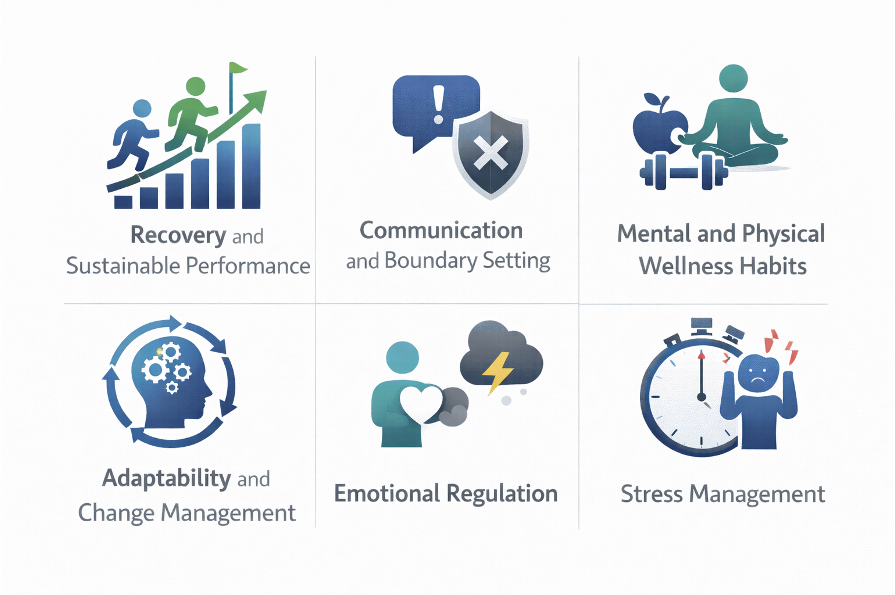
Stress Management
Employees learn how to identify stress triggers, understand their responses to pressure, and apply practical techniques to reduce stress.
Emotional Regulation
Training helps employees improve emotional awareness, strengthen coping skills, and respond more effectively to workplace challenges.
Adaptability and Change Management
Employees develop strategies to manage uncertainty, navigate transitions, and remain effective during organizational change.
Mental and Physical Wellness Habits
Employees receive guidance on sleep, movement, exercise, recovery, and sustainable routines that support resilience.
Communication and Boundary Setting
Training includes strategies for setting boundaries, improving communication, and reducing unnecessary workplace strain.
Recovery and Sustainable Performance
Employees learn how to manage workload, avoid chronic exhaustion, and sustain performance over time.
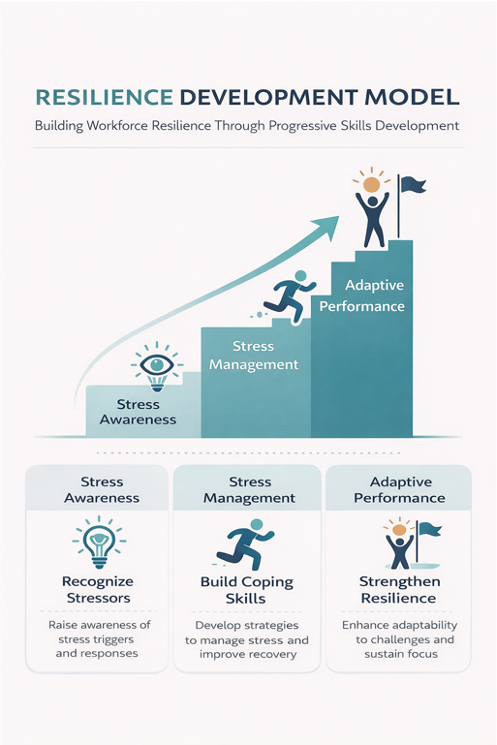
The Health Will Matter Resilience Model
Health Will Matter views resilience as more than stress management alone. True resilience is developed through a combination of mental, emotional, physical, social, and occupational wellbeing.
Our resilience model helps employees move through four stages:
Awareness — Recognizing stressors, challenges, and burnout risk
Skill Building — Learning tools to manage pressure and improve wellbeing
Habit Formation — Creating sustainable routines that support resilience
Long-Term Sustainability — Maintaining healthy behaviors and performance over time
This approach creates stronger employees, healthier teams, and more sustainable organizations.
Unlike one-time workshops or generic wellness programs, Health Will Matter provides resilience training that is connected to the Eight Dimensions of Wellness and reinforced through ongoing support.
Outcomes Organizations Can Expect
Organizations that invest in employee resilience training may experience:
lower burnout risk
improved morale and engagement
stronger employee confidence
reduced absenteeism
better teamwork and communication
improved adaptability during change
stronger employee retention
more sustainable workforce performance
Resilience is not simply an individual skill. It is a workforce capability that directly impacts culture, productivity, engagement, and long-term organizational success.
Build a More Resilient Workforce
Health Will Matter helps organizations create employees who are better equipped to manage stress, adapt to change, and sustain performance.