
Reduce Burnout. Strengthen Resilience. Protect Workforce Performance.
Preventive workforce wellness strategies designed to reduce burnout risk, improve retention, and support sustainable organizational performance.
Health Will Matter provides workplace wellness consulting and workforce wellbeing strategies designed to reduce burnout risk, strengthen employee resilience, and support long-term organizational performance.

Why Workforce Wellness Matters
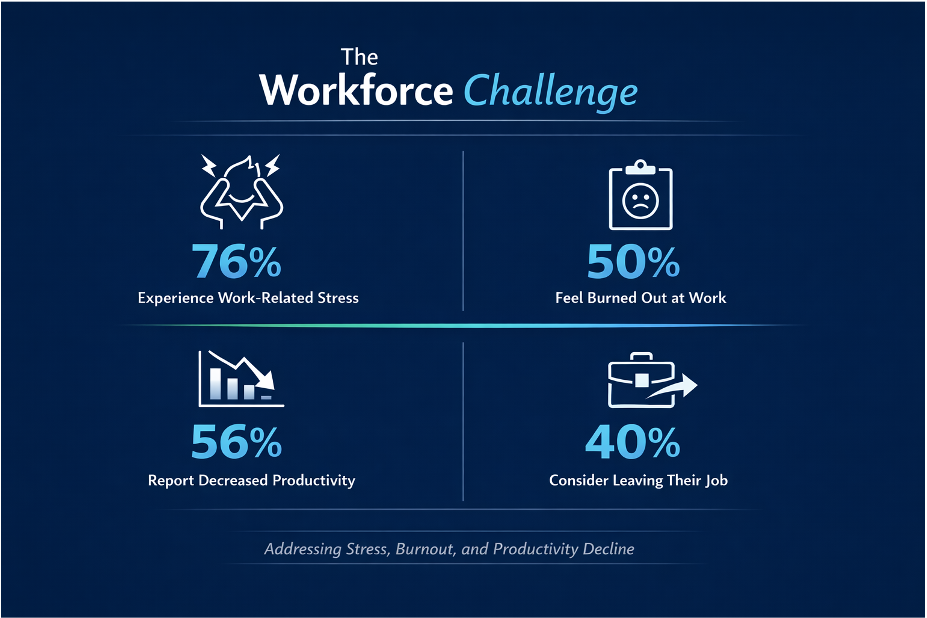
Organizations across the United States are facing increasing challenges related to employee burnout, workplace stress, mental health concerns, turnover, absenteeism, and declining workforce engagement.
Research consistently demonstrates that employee wellbeing is directly connected to organizational performance. Employees who feel supported are more likely to remain engaged, productive, resilient, and committed to their organizations.
At Health Will Matter, we help employers develop proactive workforce wellness strategies designed to reduce burnout risk, strengthen resilience, improve employee wellbeing, and create healthier workplace cultures that support long-term organizational success.
Modern workplaces are experiencing increasing levels of employee burnout, workplace stress, and workforce fatigue. These challenges affect employee engagement, productivity, and long-term workforce stability.
While many organizations offer wellness initiatives, these programs are often fragmented or reactive. Addressing workforce wellbeing effectively requires a more strategic approach—one that strengthens employee resilience while also addressing the organizational conditions that influence workplace health.
Health Will Matter helps organizations reduce burnout risk, strengthen workforce resilience, and improve organizational performance through integrated wellness strategies built around the Eight Dimensions of Wellness.
Workforce Wellbeing Strategies for Sustainable Organizational Performance
Why Health Will Matter
Built on the Eight Dimensions of Wellness
Preventive rather than reactive
Integrates mental and physical wellbeing
Supports leadership and employees
Designed for measurable organizational outcomes
Our Approach to Workforce Wellness
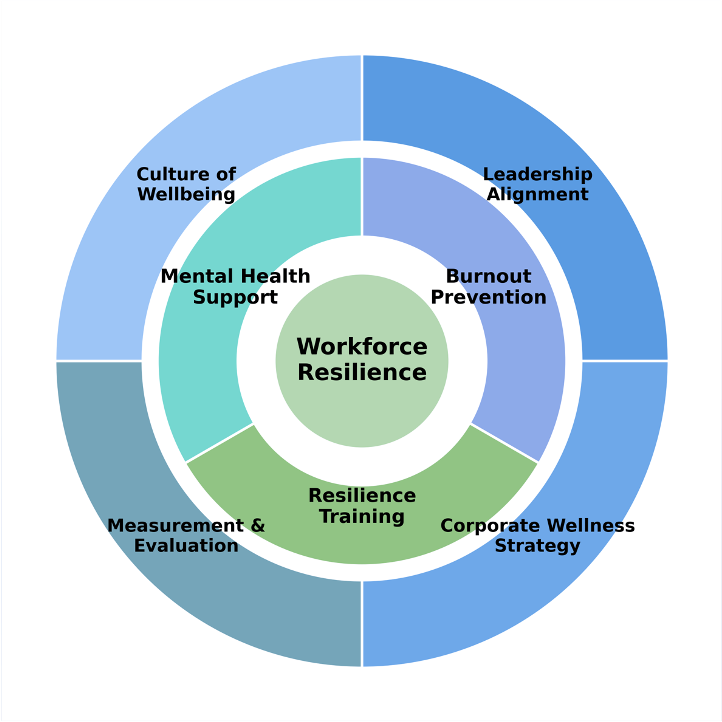
Effective workforce wellness strategies require more than isolated programs. Organizations benefit most when wellness initiatives address both employee resilience and the broader workplace environment.
Health Will Matter focuses on preventive wellness strategies that strengthen employee wellbeing while supporting sustainable workplace performance.
Our approach emphasizes:
• burnout prevention
• resilience development
• mental health support
• leadership alignment and organizational strategy
These elements work together to strengthen workforce resilience and support healthier workplace cultures:
🛡 Prevention First
👥 Leadership Integration
📊 Practical and Measurable
Health Will Matter provides integrated employee wellness programs and corporate wellness consulting services designed to reduce workplace burnout, strengthen resilience, and support healthier organizational cultures.
Our service model helps organizations move from fragmented wellness efforts toward a structured workforce wellbeing strategy.
Corporate Wellness Services

Burnout Prevention Programs
Burnout often begins with sustained pressure, unclear expectations, and unmanaged workload stress.
Our burnout prevention programs help organizations identify early warning signs, equip managers to intervene earlier, and reduce performance decline before it spreads across teams.

Resilience is not an individual trait — it is a skill that can be developed.
Our employee resilience training programs provide practical tools for managing stress, maintaining focus under pressure, and adapting effectively during organizational change.
Leaders also learn how to support resilience across teams, not just at the individual level.
Employee Resilience Training

Workplace Mental Health Education Programs
Mental health literacy matters.
Through structured workplace mental health education programs, we help managers recognize stress indicators, create psychological safety, and respond appropriately without escalating risk.
Education reduces stigma.
Clarity reduces hesitation.
Early action reduces cost.
Each service supports organizations in developing practical wellness strategies aligned with workforce needs and organizational goals.

Corporate Fitness and Wellness Programs
Physical health impacts cognitive performance more than most employers realize.
Our corporate fitness and wellness programs integrate preventive care, structured wellness strategy, and physical performance support that reduces absenteeism and supports sustained energy.
Because healthy teams perform better.
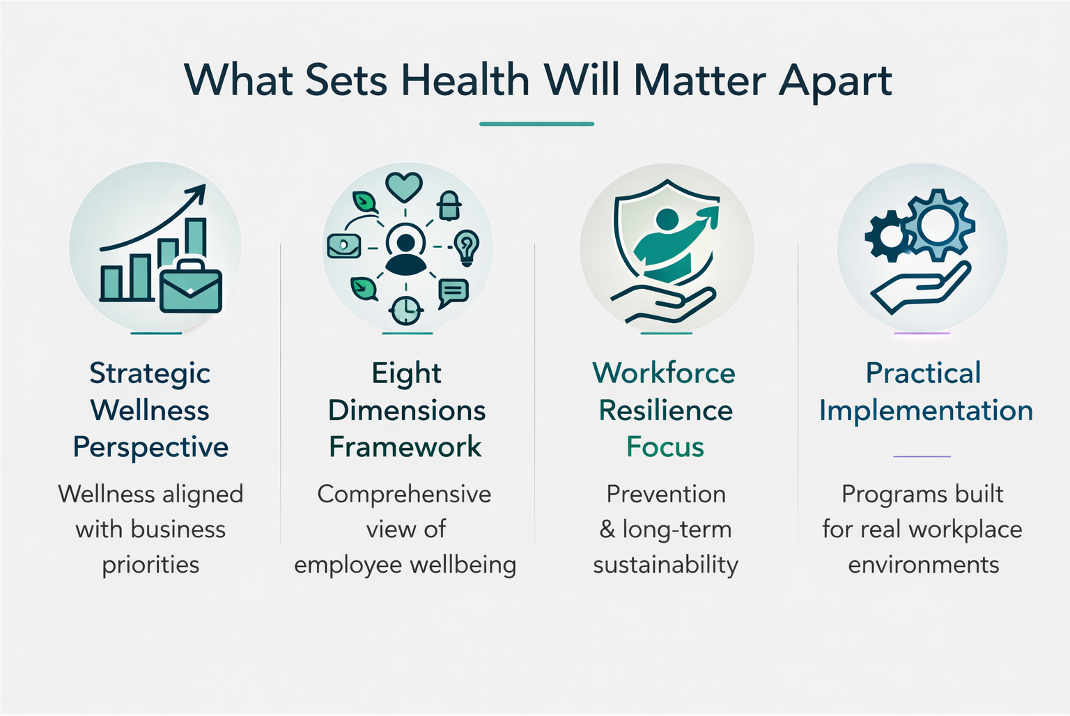
Health Will Matter believes that wellness cannot be reduced to a single initiative, benefit, or activity.
Workforce wellbeing is influenced by multiple interconnected factors, including mental health, workplace culture, physical health, social connection, and financial stability.
For this reason, our approach is built around the Eight Dimensions of Wellness.
When organizations address these dimensions together, they move beyond fragmented wellness initiatives and create environments that support the whole employee.
This multidimensional model forms the foundation of the Health Will Matter Wellness Framework.

Preventive Wellness vs Traditional EAP Programs
Many organizations already offer Employee Assistance Programs (EAPs). These services provide crisis counseling and referral support when employees face significant stress.
However, EAP support typically activates after problems escalate.
Preventive wellness strategies address the conditions that create burnout in the first place.
Here’s the difference:
| Traditional EAP Model | Preventive Wellness Model |
|---|---|
| Crisis counseling after burnout | Early stress and burnout identification |
| Short-term, reactive support | Long-term resilience development |
| Employee must initiate contact | Leadership-guided intervention |
| Limited leadership visibility | Business-aligned performance tracking |
| Addresses problems after escalation | Reduces risk before escalation |
Preventive wellness does not replace EAP programs.
It strengthens them by reducing the number of employees who reach crisis intervention.
Developing a Sustainable Wellness Strategy
Many organizations recognize the importance of employee wellbeing but struggle to move beyond isolated wellness activities toward a coordinated strategy. A sustainable workforce wellness strategy focuses on long-term organizational health by addressing the factors that influence employee resilience, workplace culture, and burnout risk.
Rather than relying solely on short-term initiatives such as wellness challenges or incentives, organizations benefit from implementing structured wellness strategies that align leadership priorities, workforce needs, and organizational goals.
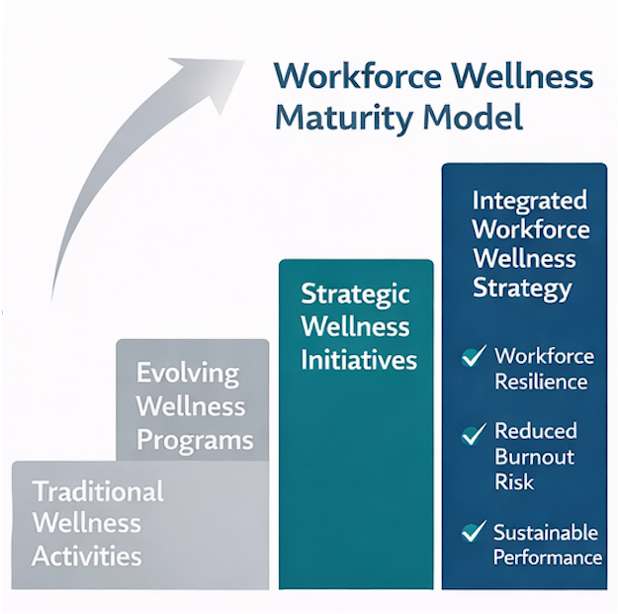
Moving Beyond Isolated Wellness Programs
Traditional workplace wellness programs often focus on individual activities, such as fitness initiatives or short-term wellbeing campaigns. While these efforts can raise awareness, they may not fully address the underlying workplace factors that contribute to employee burnout and stress.
A sustainable wellness strategy considers the broader organizational environment, including leadership practices, workload expectations, workplace culture, and access to mental health resources.
Wellness is not a perk.
It is operational protection.
Key Elements of a Sustainable Wellness Strategy


-
Identifying and addressing workplace factors that contribute to employee stress and exhaustion.
Learn more about our Burnout Prevention Programs
-
Equipping employees with practical skills to manage stress, adapt to change, and maintain performance.
Explore Employee Resilience Training
-
Creating a work environment that supports psychological wellbeing and reduces stigma around mental health.
Learn about Workplace Mental Health Programs
-
Ensuring workforce wellbeing initiatives align with leadership priorities and organizational culture.
Discover Corporate Wellness Consulting
Develop a Strategic Approach to Workforce Wellbeing
If your organization is exploring ways to strengthen employee resilience, reduce burnout risk, and implement a sustainable workforce wellness strategy, we would welcome the opportunity to learn about your goals.
Frequently Asked Questions
-
Corporate wellness programs are structured initiatives designed to improve employee health, resilience, and productivity. Preventive corporate wellness programs focus on reducing burnout, stabilizing performance, and lowering long-term organizational risk — not just offering short-term support.
-
Traditional EAP wellness programs provide crisis-based counseling and short-term support. Preventive wellness programs reduce the likelihood of crisis by strengthening resilience, addressing stress early, and aligning wellness with measurable business outcomes.
-
Yes. Structured burnout prevention programs identify stress indicators early, train managers to intervene appropriately, and support employees before disengagement impacts performance or retention.
-
When stress is managed and resilience increases, employees maintain focus, energy, and engagement. Preventive programs reduce absenteeism, improve retention, and support consistent workforce productivity.When stress is managed and resilience increases, employees maintain focus, energy, and engagement. Preventive programs reduce absenteeism, improve retention, and support consistent workforce productivity.
-
Yes. Our preventive model is designed to complement EAP wellness programs. By reducing the frequency of crisis-level situations, organizations often see more efficient use of their existing EAP services.
Common Workforce Challenges We Help Organizations Address
Health Will Matter supports employers seeking solutions for:
Employee burnout
Workplace stress
Employee retention challenges
Low employee engagement
Workplace mental health concerns
Leadership wellbeing
Organizational culture challenges
Workforce resilience development
Employee wellbeing strategy development
Wellness program implementation
Our consulting approach is designed to help organizations move beyond reactive wellness initiatives toward sustainable workforce wellbeing strategies.