
Employee Assistance Program (EAP+) with Preventive, Integrated Support
A traditional Employee Assistance Program (EAP) offers confidential, short-term counseling when employees face personal or workplace challenges.
That support matters.
But many EAP wellness programs are built around crisis response — not ongoing workforce stability.
Our enhanced Employee Assistance Program (EAP+) delivers licensed mental health support, structured engagement, and leadership-aligned reporting designed to reduce risk before issues escalate.
Confidential. HIPAA-compliant. Relationship-based.
Built not only to respond — but to prevent.
Employee Assistance Program (EAP+) — Quick Overview
What We Deliver
Confidential, HIPAA-compliant Employee Assistance Program
Licensed mental health professionals
Integrated behavioral and physical support
Relationship-based engagement
Executive-level reporting
Who It’s For
Mid-size and enterprise employers
High-stress industries
Organizations upgrading traditional EAP wellness programs
Leaders focused on retention and risk reduction
Business Impact
Higher EAP utilization
Reduced burnout risk
Improved workforce stability
Stronger performance protection
An Employee Assistance Program (EAP) is an employer-sponsored benefit that provides confidential counseling and support services to employees dealing with personal or work-related challenges.
Traditional EAP services typically include:
Short-term counseling sessions
Mental health referrals
Substance abuse assistance
Financial and legal consultation
Crisis intervention support
The purpose is simple: help employees resolve issues that may affect their well-being or job performance.
Most EAP programs operate as third-party providers. Employees contact a confidential support line, receive limited counseling sessions, and may be referred to external specialists if ongoing care is needed.
EAP services are designed to be private, HIPAA-compliant, and accessible at no direct cost to the employee.
They provide important crisis support.
However, many organizations find that traditional models are reactive — activating only after stress has escalated.
That’s where enhanced and preventive EAP models begin to differ.
What Is an Employee Assistance Program?
Our Preventive Employee Assistance Program (EAP+) Model
Most traditional Employee Assistance Programs operate as reactive systems. An employee reaches out during a crisis, receives a limited number of counseling sessions, and may be referred externally for ongoing care.
Our model works differently.
The EAP+ approach is built around structured, ongoing engagement — not one-time intervention.
Integrated Care Team & Structured Delivery
An effective Employee Assistance Program must be more than a hotline.
Our EAP+ model is delivered through a coordinated care team designed to provide consistent, preventive workforce support.

1. Licensed Mental Health Professionals
Confidential counseling is delivered by licensed clinicians who understand workplace anxiety, burnout, and behavioral health challenges. Sessions are structured, ongoing, and fully HIPAA-compliant.
This is not referral-only support. It is direct, professional care.
_____________________________________
2. Certified Personal Trainers
Mental strain often shows up physically — fatigue, sleep disruption, tension, low energy.
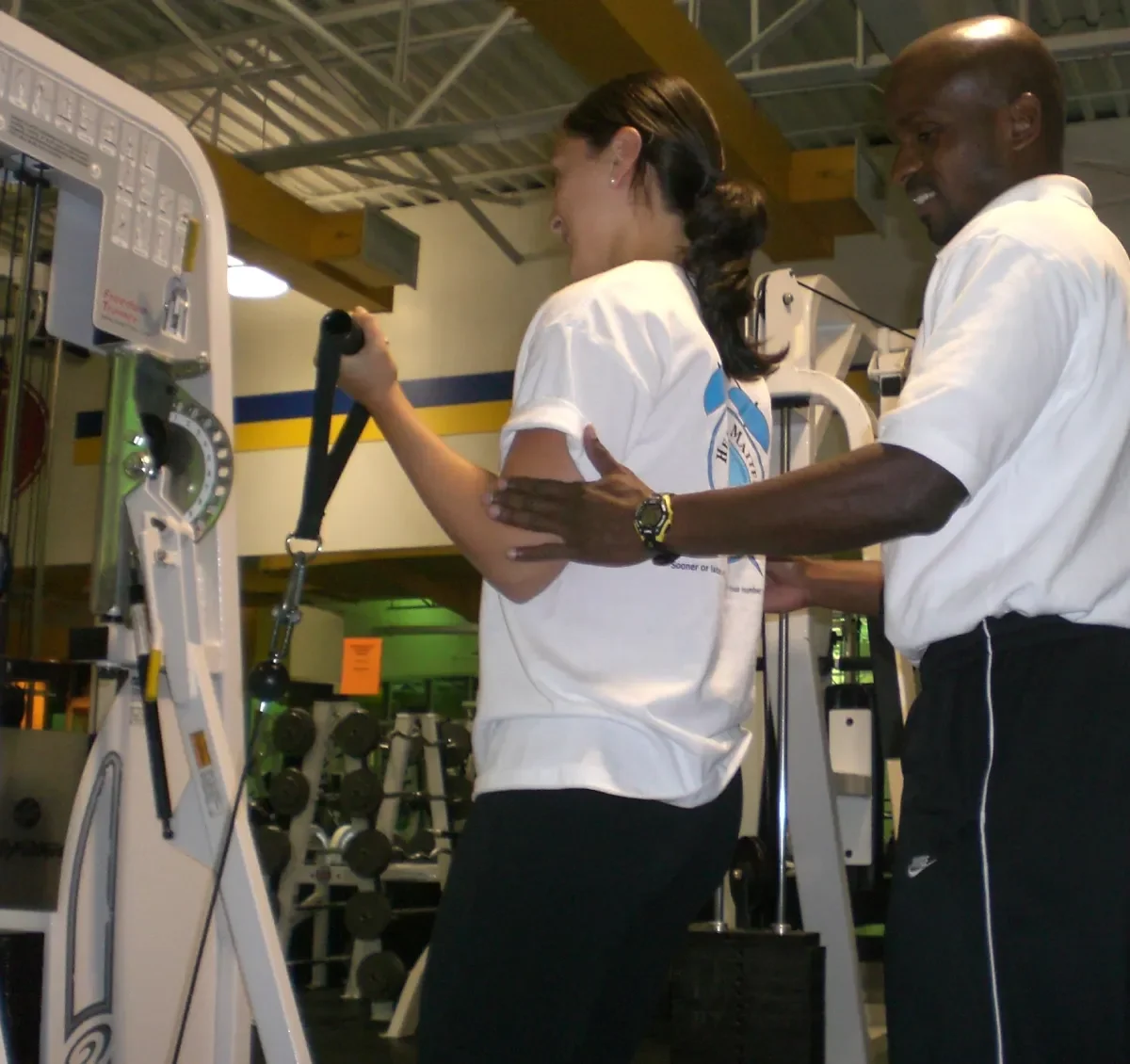
Certified Personal Trainers provide structured physical resilience support that complements behavioral health services. This integrated approach strengthens both mental clarity and physical capacity.

A Wellness Director oversees program coordination, monitors aggregate workforce trends, and provides executive-aligned reporting.
Leadership gains visibility into emerging stress patterns — without compromising individual confidentiality.
_____________________________________
4. Flexible Session Structure
Employees can access weekly or biweekly sessions depending on organizational needs and program design.
Consistency improves trust.
Trust improves utilization.
_____________________________________
5. Confidential & Employer-Aligned Delivery
All services are confidential, ethical, and compliant with professional standards. Care delivery aligns with employer objectives while protecting employee privacy.
Support must be trusted to be used.
And used support protects performance.
3. Dedicated Wellness Director

Workforce challenges rarely exist in isolation.
Stress at work affects sleep.
Fatigue affects focus.
Financial strain affects mental clarity.
That’s why our Employee Assistance Program (EAP+) follows the Eight Dimensions of Wellness — a structured framework that reflects how burnout actually develops across multiple areas of life.
We address:
Built on the 7 Dimensions of Wellness
-
Confidential counseling support for anxiety, stress, depression, grief, and emotional strain that may affect workplace performance.
-
Integrated fitness support and preventive physical engagement to strengthen energy, endurance, and resilience.
-
Support for workload pressure, leadership fatigue, workplace conflict, and performance-related stress.
-
Guidance around communication, team dynamics, and relational challenges that influence morale and engagement.
-
Referral support and structured resources for financial stressors that often impact mental stability.
-
Respectful, inclusive support for personal meaning, values alignment, and purpose-driven stability.
-
Support systems that encourage healthy work environments, learning growth, and cognitive engagement.
Burnout doesn’t start in one category.
It spreads.
Effective EAP services for employers must reflect that reality — integrating behavioral health, physical support, and structured engagement into one coordinated system.
What Makes Our Employee Assistance Program Different
-
Traditional EAP models activate after stress escalates.
Our model emphasizes early engagement. Licensed professionals work with employees consistently, helping identify pressure patterns before they become performance issues.
Prevention reduces crisis frequency.
-
Most EAP providers operate through referral networks.
Employees often speak to someone once — then are redirected elsewhere.
We deliver ongoing, structured support through licensed mental health professionals who build continuity and trust.
Trust increases utilization.
Utilization increases impact. -
Stress is not only psychological.
Fatigue, tension, sleep disruption — these show up physically.
Our integrated approach combines behavioral health services with physical resilience support, strengthening overall workforce stability.
This is coordinated care. Not fragmented services.
-
Traditional EAP vendors often provide basic usage statistics.
We provide structured, aggregate reporting that helps leadership understand workforce trends — without compromising confidentiality.
This supports:
Workforce risk mitigation
Absenteeism reduction strategies
Retention stability
Performance protection
-
Low utilization rates are one of the most common limitations of traditional EAP services.
We address this through:
Visible engagement
Relationship-based access
Structured communication
Leadership alignment
Support that is visible is more likely to be used.
And used support protects performance.
Many organizations already offer an Employee Assistance Program.
The structure is familiar.
Confidential hotline.
Limited counseling sessions.
External referrals.
It provides important coverage.
But coverage is not the same as engagement.
Our enhanced EAP wellness program is built differently — not to replace support, but to strengthen it.


When Traditional EAP Wellness Programs Fall Short
Traditional EAP wellness programs provide important safety coverage.
But many organizations experience the same pattern.
The benefit exists.
The hotline is available.
Utilization remains low.
Here’s where gaps often appear.
1. Crisis-Only Activation
Most Employee Assistance Programs are designed for acute situations.
An employee reaches out when stress has already escalated — not when early pressure begins to build.
By the time support is activated, performance may already be affected.
Prevention requires earlier engagement.
2. Limited Session Structures
Traditional EAP services often cap counseling sessions at a small number.
Short-term intervention can stabilize immediate concerns, but it may not address ongoing stress patterns or systemic workplace pressure.
Support becomes episodic instead of continuous.
3. Referral-Based Delivery Models
Many EAP providers operate through external referral networks.
Employees may speak to one counselor briefly, then transition to another provider for continued care.
This model can disrupt continuity and reduce trust.
Consistency improves outcomes.
4. Minimal Leadership Visibility
Standard EAP vendors typically report utilization numbers.
But utilization alone does not reveal workforce trends.
Without structured, aggregate insights, leadership cannot identify emerging stress patterns, burnout indicators, or engagement gaps.
Visibility supports proactive decision-making.
5. Low Utilization Rates
A common challenge across industries is underuse.
Employees may:
Be unaware of services
Question confidentiality
Delay seeking support
View EAP as crisis-only
When utilization is low, impact is limited — even if the benefit technically exists.
Traditional models provide necessary coverage.
But coverage alone does not equal workforce stability.
That is where preventive, integrated Employee Assistance Program services begin to differ.
Business Impact & ROI of an Enhanced Employee Assistance Program
Executives don’t invest in an Employee Assistance Program for good intentions.
They invest to reduce risk.
An enhanced EAP must show measurable impact across workforce stability, healthcare exposure, and productivity protection.
Here’s where structured EAP services for employers create value.
-
Low engagement limits the effectiveness of many traditional EAP wellness programs.
When support is relationship-based and consistently visible, utilization increases. Higher participation leads to earlier intervention — and fewer escalated crises.
Utilized support protects performance.
-
Unmanaged stress often results in increased time off.
Preventive behavioral health support helps employees address pressure early, reducing stress-related absences and improving continuity across teams.
-
Employees may be physically present but mentally overwhelmed.
This hidden productivity drain can be more costly than absenteeism.
An enhanced Employee Assistance Program supports focus, emotional regulation, and resilience — improving day-to-day performance stability.
-
Burnout contributes to turnover.
Replacing experienced employees carries financial and operational cost.
Structured EAP support strengthens employee resilience and reduces preventable attrition.
Retention stability supports predictable growth.
-
Our model can be structured in Per-Employee-Per-Month (PEPM) terms, supporting clear budgeting and financial planning.
Instead of viewing EAP as a passive benefit, organizations can evaluate it as a proactive risk mitigation investment.
Wellness is not a soft initiative.
It is performance infrastructure.
Industries That Benefit Most from Enhanced EAP Services
Workplace pressure looks different across industries.
An effective Employee Assistance Program must adapt to operational demands, workforce structure, and stress patterns unique to each environment.
Our enhanced EAP services for employers are particularly valuable in high-demand sectors where burnout risk, performance pressure, and workforce fatigue are common.
Healthcare Organizations
Healthcare teams operate under sustained emotional and physical strain.
Long shifts. Critical decisions. Compassion fatigue.
An integrated Employee Assistance Program supports:
Trauma-informed behavioral health care
Stress and burnout prevention
Confidential counseling for clinical staff
Structured resilience reinforcement
Supporting caregivers protects patient outcomes.
Technology Companies
Fast-paced product cycles and constant digital engagement create cognitive overload.
Common challenges include:
Performance pressure
Extended screen time
Leadership fatigue
Retention volatility
Preventive EAP models strengthen emotional resilience and improve engagement consistency in rapidly scaling teams.
Industrial Operations
Shift work, safety exposure, and physical strain increase stress risk.
An enhanced Employee Assistance Program provides:
Behavioral health support
Substance abuse assistance programs
Injury-related stress counseling
Workforce stability monitoring
Prevention reduces downtime and improves operational continuity.
Professional Firms
High-performance environments often mask silent burnout.
Deadline pressure. Client expectations. Decision fatigue.
Structured EAP engagement supports:
Stress management
Confidential counseling
Retention stability
Mental clarity supports precision work.
Public Sector & Nonprofit Organizations
Resource constraints and emotional workload can create sustained pressure.
An integrated EAP model strengthens support systems while maintaining confidentiality and compliance standards.
High-stress industries benefit most from preventive, relationship-based care.
But any organization focused on retention, risk reduction, and performance protection can benefit from a structured Employee Assistance Program.
Who This Employee Assistance Program Is For
Our Employee Assistance Program (EAP) is designed for employers who:
Operate in high-stress or high-demand industries
Want to improve EAP utilization rates
Need confidential, HIPAA-compliant EAP services for employers
Are evaluating alternatives to traditional EAP wellness programs
Seek preventive, relationship-based behavioral health support
Want a stronger workforce stability and risk mitigation
Require leadership-aligned reporting and structured engagement
This enhanced Employee Assistance Program is particularly suited for organizations that view employee support as a performance strategy — not just a compliance benefit.
It is not built for employers seeking low-cost, referral-only EAP vendors or minimal engagement models.
It is built for organizations ready to strengthen workforce resilience through preventive, integrated support.
Implementation & Delivery Model For EAP
Every organization has different stress patterns.
We begin with a structured assessment to identify workforce needs, existing support gaps, and early risk indicators.
This may include:
Confidential surveys and questionnaires
Leadership interviews
Focus groups
Review of existing EAP utilization trends
Evaluation across the Eight Dimensions of Wellness
Findings are shared with leadership in aggregate form — protecting individual confidentiality while providing operational clarity.
This phase can stand alone as an advisory engagement if desired.
01 - Assessment
Once priorities are defined, structured service delivery begins.
A coordinated care team includes:
Licensed Mental Health Professionals providing scheduled counseling
Certified Personal Trainers delivering physical resilience support
A Wellness Director overseeing engagement and data reporting
Employees access confidential behavioral health services on a weekly or biweekly basis, depending on program design.
Care is:
HIPAA-compliant
Confidential
Employer-aligned
Relationship-based
Support remains accessible, visible, and consistent.
2. Program Delivery
Prevention requires measurement.
Quarterly aggregate reporting provides leadership with visibility into:
Utilization patterns
Emerging stress themes
Engagement trends
Workforce stability indicators
No personal data is disclosed.
The objective is proactive adjustment — refining support before risk escalates.
Structured implementation creates accountability.
Accountability strengthens impact.
3. Optimization

Frequently Asked Questions About Our Employee Assistance Program
-
An Employee Assistance Program is an employer-sponsored benefit that provides confidential counseling and support services to employees facing personal or work-related challenges. Traditional EAP services typically focus on short-term crisis intervention. Our enhanced EAP+ model adds structured, ongoing engagement to support workforce stability.
-
Most traditional EAP wellness programs are referral-based and session-limited. Our model delivers ongoing access to licensed professionals, integrated mental and physical support, and executive-aligned reporting designed to improve utilization and reduce workforce risk.
-
Yes. All services are confidential and delivered in compliance with HIPAA and professional ethics standards. Leadership receives only aggregate, anonymized reporting — never individual session details.
-
Yes. Our enhanced model can replace a traditional EAP provider or function as an EAP complementary wellness service to strengthen existing coverage.
-
Utilization improves when employees trust the system and understand how to access it. Relationship-based care, structured engagement, and visible leadership alignment increase participation compared to hotline-only models.
-
Session frequency is structured around organizational needs and program design. Employees may access weekly or biweekly sessions depending on the engagement model selected.
-
High-demand industries such as healthcare, technology, manufacturing, professional services, and public sector organizations often see the strongest impact due to elevated stress exposure and workforce pressure.
Upgrade Your Employee Assistance Program
An Employee Assistance Program should do more than provide coverage.
It should strengthen workforce stability, improve utilization, and reduce preventable risk.
If your current EAP operates as a crisis-only hotline with limited visibility and engagement, it may be time to evaluate a more structured model.
Our enhanced EAP+ approach integrates licensed behavioral health support, preventive engagement, and executive-aligned reporting — designed to protect performance before issues escalate.
Coverage is necessary.
Prevention is strategic.
Strengthen your support system. Improve workforce resilience. Reduce risk exposure.